

Introduction
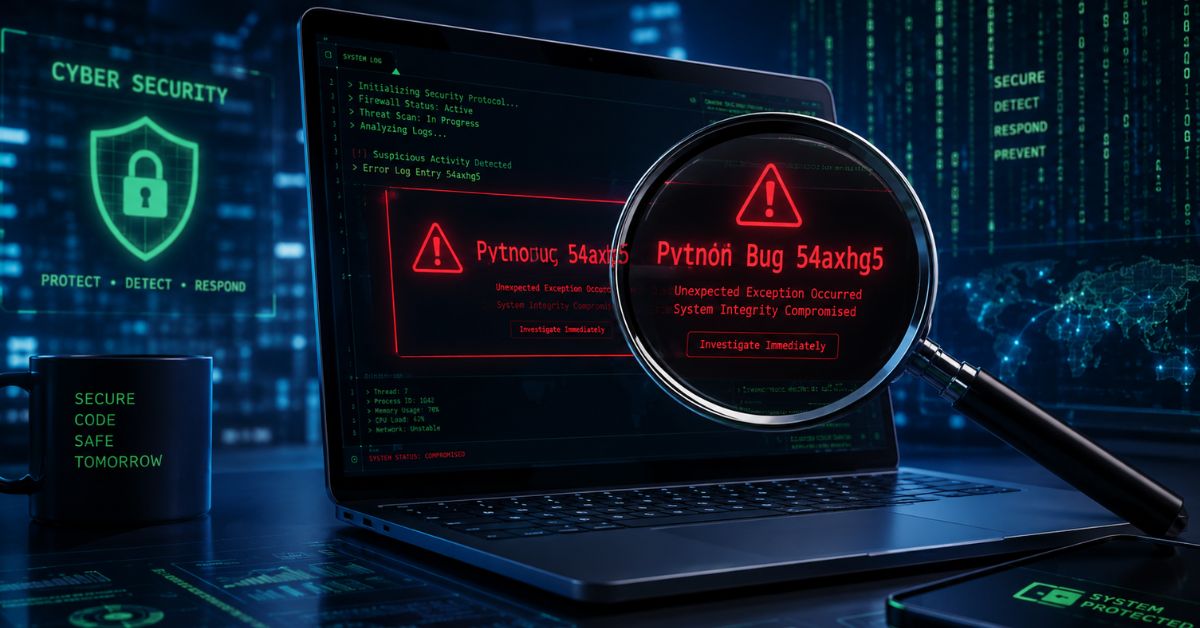
You’re not alone if you’ve lately looked up Python Bug 54axhg5. Developers, students, and IT teams have been encountering this mysterious code in forums, emails, and even suspicious pop-up messages. The problem? It’s not recognized as an official Python error.
In today’s fast-paced technology environment, misinformation spreads quickly, especially when it involves programming languages like Python, which powers everything from web applications to AI systems. When a strange error code appears, it can cause panic, wasted time, and even cybersecurity risks.
This thorough article reveals the truth about Python Bug 54axhg5, explains why it’s not a valid Python mistake, and offers doable solutions to confirm, troubleshoot, and safeguard against bogus bug codes. Whether you’re a beginner learning Python or an experienced developer managing production systems, this article will help you separate fact from fiction and strengthen your debugging strategy in the process.
What Is Python Bug 54axhg5?
At first glance, Python Bug 54axhg5 appears to be a standard error code. However, after reviewing official Python documentation and repositories, there is no record of such an error existing. Python errors typically follow structured naming conventions, such as the following:
- SyntaxError
- TypeError
- ValueError
- ImportError
- IndexError
Python Bug 54axhg5 does not follow Python’s accepted error name patterns, in contrast to these valid exceptions.
Key Facts
- GitHub and bugs.python.org are used to track official Python bugs.
- Error names are descriptive and human-readable.
- Random alphanumeric strings are not standard Python error identifiers.
- No release notes or changelogs mention this code.
- The official Python documentation does not mention it.
Why It Raises Suspicion
Python uses meaningful exception names to help developers debug quickly. A random string like “54axhg5” does not align with this principle. In many cases, such codes originate from:
- Fake tech support scams
- Malicious pop-ups
- Poorly documented third-party software
- Internal company systems generating custom IDs
Understanding this distinction is the first step in preventing confusion or potential security risks.
How Python Officially Handles Bugs and Errors
To understand why Python Bug 54axhg5 is suspicious, it helps to know how Python officially manages bugs. Python is an open-source language maintained by the Python Software Foundation (PSF). Bugs are tracked transparently using GitHub and documented clearly.
How Python Reports Errors
When a Python program fails, it typically generates the following:
- A Traceback
- A specific exception type
- A descriptive message
- The line number where the issue occurred
Official Bug Tracking Process
- Developers submit issues on GitHub.
- Core maintainers review and classify them.
- The official Python documentation does not mention it.
- Fixes are documented in release notes.
Official vs. Suspicious Error Codes
| Feature | Official Python Error | “Python Bug 54axhg5” |
| Listed in Documentation | ✅ Yes | ❌ No |
| Human-readable Name | ✅ Yes | ❌ No |
| Appears in GitHub Issues | ✅ Yes | ❌ No |
| Traceback Provided | ✅ Yes | ❌ Usually not |
| Verified by PSF | ✅ Yes | ❌ No |
This comparison clearly shows why the code does not meet Python’s standard practices.
Common Reasons Fake Bug Codes Appear
Fake or unofficial error codes often originate from outside Python itself.
Typical Sources
- Malicious browser pop-ups
- Fake antivirus warnings
- Scam tech support websites
- Compromised plugins or extensions
- Custom internal logging systems
Cybercriminals frequently use technical-sounding codes to create urgency. This tactic exploits fear and confusion.
Warning Signs
- Requests for remote access
- Urgent phone numbers displayed
- Demands for payment
- Full-screen browser lock messages
- Poor grammar or suspicious URLs
According to the Federal Trade Commission (FTC), tech support scams cost consumers millions annually. Fake error codes are a common method. Being aware of these tactics helps you respond rationally instead of emotionally.
How to Verify Whether an Error Code Is Real
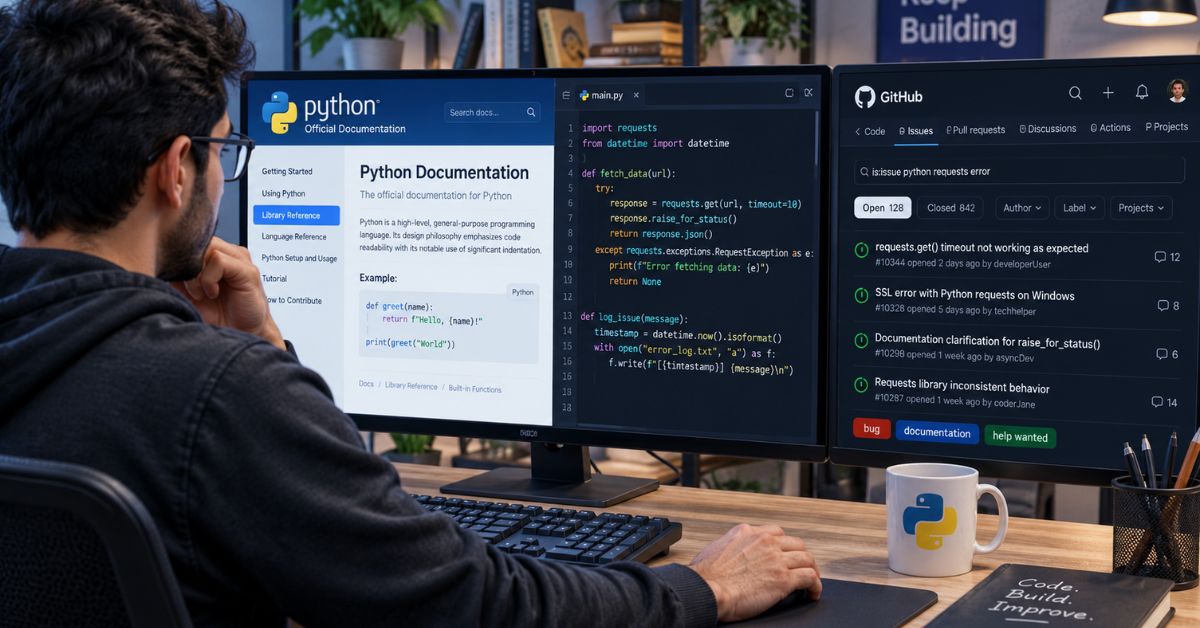
Verification is simple if you follow a systematic approach.
Step-by-Step Verification Process
- Check Official Documentation
- Search the GitHub repository
- Review the Traceback
File names and line numbers are examples of actual Python mistakes. - Search Developer Forums
Platforms like Stack Overflow often contain legitimate discussions. - Run the Code in Isolation
Test your script in a clean environment.
Quick Checklist
- Is the error human-readable?
- Does it include a traceback?
- Is it reproducible?
- Does documentation mention it?
If the answer is “no” to most of these, it’s likely not an official Python issue.
Cybersecurity Risks Linked to Fake Python Errors
Fake error codes are not just annoying; they can be dangerous.
Potential Risks
- Malware installation
- Credential theft
- Ransomware attacks
- Financial fraud
- Data breaches
Case Study Example
In 2024, a small business reported seeing a “Python System Failure Code” pop-up. An employee called the displayed number and granted remote access. Within hours:
- Sensitive files were encrypted.
- $5,000 was demanded in cryptocurrency.
- Customer data was compromised.
The lesson? No legitimate Python error instructs you to call a phone number.
How to Protect Yourself
- Install reputable antivirus software.
- Keep your browser updated.
- Avoid downloading unknown extensions.
- Educate team members about phishing tactics.
Security awareness is your strongest defense.
Real Python Errors Developers Often Confuse
Sometimes confusion arises from misunderstanding legitimate errors.
Common Python Exceptions
- ModuleNotFoundError
- AttributeError
- KeyError
- IndentationError
- RuntimeError
Example Comparison Table
| Error | Cause | Example |
| SyntaxError | Invalid syntax | Missing colon |
| TypeError | Wrong data type | Adding int + string |
| ImportError | Module missing | Incorrect package name |
| IndexError | Out-of-range index | Accessing invalid list index |
Understanding these reduces the likelihood of falling for fake codes like Python Bug 54axhg5.
Troubleshooting Strategy for Unknown Errors
When encountering an unfamiliar error:
Structured Debugging Approach
- Stay calm.
- Copy the exact error message.
- Reproduce the issue.
- Isolate the faulty code.
- Search documentation.
Developer Best Practices
- Use virtual environments.
- Maintain dependency logs.
- Keep Python updated.
- Enable logging for clarity.
Professional developers rely on systematic debugging not panic.
Case Study: Investigating Python Bug 54axhg5
Let’s simulate a scenario.
Investigation Steps
- Checked Python docs: No record.
- Searched GitHub: No matches.
- Reviewed local logs: No traceback.
- Scanned system: Found malicious browser extension.
Conclusion: The code originated from adware, not Python.
Lessons Learned
- Always verify before acting.
- Avoid clicking suspicious pop-ups.
- Maintain secure browsing practices.
Preventing Misinformation in Developer Communities
Misinformation spreads quickly in online forums.
How to Promote Accuracy
- Share official documentation links.
- Correct false claims politely.
- Encourage verification.
- Avoid spreading unverified screenshots.
Trusted sources include:
- Python org
- GitHub CPython repository
- Stack Overflow (verified answers)
- OWASP cybersecurity resources
Community education prevents confusion around fake terms like Python Bug 54axhg5.
Building Strong Debugging and Security Habits
Strong habits eliminate panic when unusual messages like Python Bug 54axhg5 appear.
Recommended Practices
- Learn Python’s core exception classes.
- Follow secure coding standards.
- Keep systems patched and updated.
- Regularly back up critical data.
- Train teams in cybersecurity fundamentals.
As a technology writer with experience analyzing software vulnerabilities and developer ecosystems, I’ve seen how small misunderstandings around issues like Python Bug 54axhg5 can escalate into serious security incidents. Knowledge is the best prevention tool. Developers who understand how Python truly works are far less likely to fall for fabricated issues such as Python Bug 54axhg5, and they respond with logic instead of panic.
FAQs
Does Python Bug 54axhg5 actually represent a Python error?
No. It does not appear in official documentation, GitHub issues, or release notes.
Why do I see this error on my screen?
It may originate from a malicious website, pop-up ad, or compromised browser extension.
How can I confirm if a Python error is legitimate?
Check the official Python documentation and verify that the error includes a proper traceback.
Can fake Python errors contain malware?
Yes. Some are used in phishing scams or to trick users into installing malicious software.
If I come across questionable error codes, what should I do?
Close the browser, run a security scan, and avoid contacting any phone numbers displayed.
Conclusion
The mystery behind Python Bug 54axhg5 becomes clear after careful investigation, it is not an official Python error. Instead, it likely stems from misinformation, scams, or malicious software attempting to exploit user confusion.
Understanding how Python genuinely handles exceptions empowers you to verify issues confidently, especially when encountering suspicious messages like Python Bug 54axhg5. By checking official documentation, reviewing tracebacks, and following structured debugging practices, you can quickly distinguish legitimate errors from fake ones.
In today’s digital landscape, cybersecurity awareness is just as important as coding knowledge. Stay informed, rely on trusted sources like Python org and GitHub, and never act on suspicious messages without verification.