

Introduction
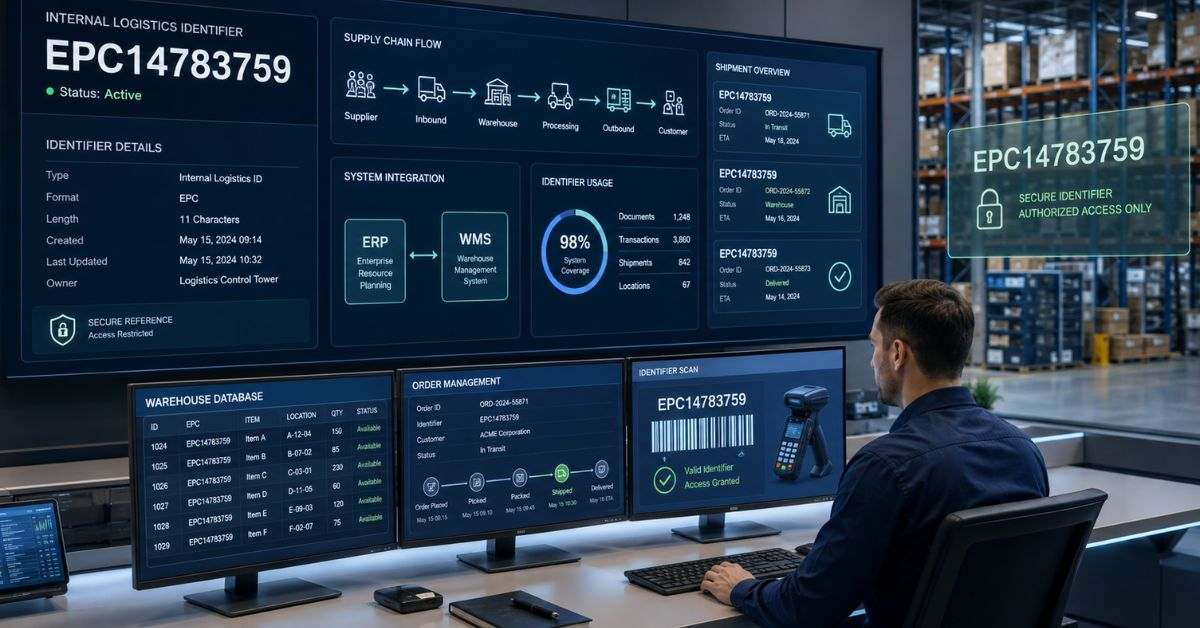
In the fast-moving world of digital commerce and global supply chains, codes and identifiers power nearly every transaction. One such identifier, EPC14783759, often appears in logistics databases, backend order systems, or shipment references. Many people mistakenly assume it is a courier tracking number. However, it typically functions as an internal tracking identifier used within logistics databases, supply chains, and online order systems.
Understanding what EPC14783759 actually represents helps eliminate confusion and reveals how modern logistics technology works behind the scenes. While customers focus on delivery updates, businesses rely on structured internal identifiers to maintain accuracy, automate workflows, and ensure operational efficiency.
In this comprehensive technology-focused guide, we’ll explore how EPC14783759 functions, why it exists, how it differs from public tracking numbers, and why internal logistics identifiers are essential in today’s automated supply chain infrastructure.
What Is EPC14783759?
EPC14783759 is best understood as a backend reference code generated within digital logistics systems. It is not designed for public tracking or customer-facing use. Instead, it serves as an internal database reference that helps connect different operational processes.
Modern logistics ecosystems rely on interconnected systems such as ERP platforms, warehouse management systems (WMS), and transportation management systems (TMS). Internal identifiers ensure these systems communicate accurately.
Typically, identifiers like EPC14783759 help:
- Link orders to warehouse inventory
- Track sorting stages during fulfillment
- Connect database entries across platforms
- Prevent duplication errors
- Enable automated scanning workflows
Unlike traditional tracking numbers issued by courier services, internal codes exist primarily inside company software environments. They act as digital anchors that allow systems to retrieve precise information instantly.
Without structured identifiers, large-scale logistics operations would experience data mismatches, delayed shipments, and costly inefficiencies.
Why EPC14783759 Is Often Confused With a Tracking Number
The confusion around EPC14783759 is understandable. It resembles conventional shipping numbers in structure alphanumeric, formatted, and system-generated.
However, courier tracking numbers are specifically created for public shipment visibility, while internal identifiers remain confined to operational systems.
Below is a comparison to clarify the difference:
| Feature | EPC14783759 | Courier Tracking Number |
| Public tracking availability | No | Yes |
| Generated by | Internal system | Shipping carrier |
| Visible to customers | Usually not | Always |
| Appears in carrier portal | No | Yes |
| Primary function | Database reference | Shipment monitoring |
Customers may encounter EPC14783759 in confirmation emails or invoice metadata, which leads them to attempt tracking it on courier websites. When it fails to return results, confusion arises.
Understanding this distinction prevents unnecessary frustration and clarifies how backend logistics systems operate.
How Internal Logistics Identifiers Work
Every online order triggers a chain of digital events. When a customer places an order, the system assigns multiple identifiers each serving a different purpose.
An internal identifier like EPC14783759 connects the following processes:
- Inventory allocation
- Warehouse picking and packing
- Quality control verification
- Shipment preparation
- Internal reporting
The identifier functions as a relational database key. It ensures that when one system updates a record, such as marking an item “picked” other connected systems reflect that update instantly.
For example, in a cloud-based ERP environment like SAP or Oracle NetSuite, structured internal IDs reduce lookup time and improve synchronization between warehouse operations and accounting systems.
This automation reduces manual intervention and improves fulfillment accuracy. According to McKinsey’s supply chain digitization research, companies implementing automated backend tracking systems report significant reductions in operational errors and fulfillment delays.
The Role of EPC Standards in Supply Chain Technology
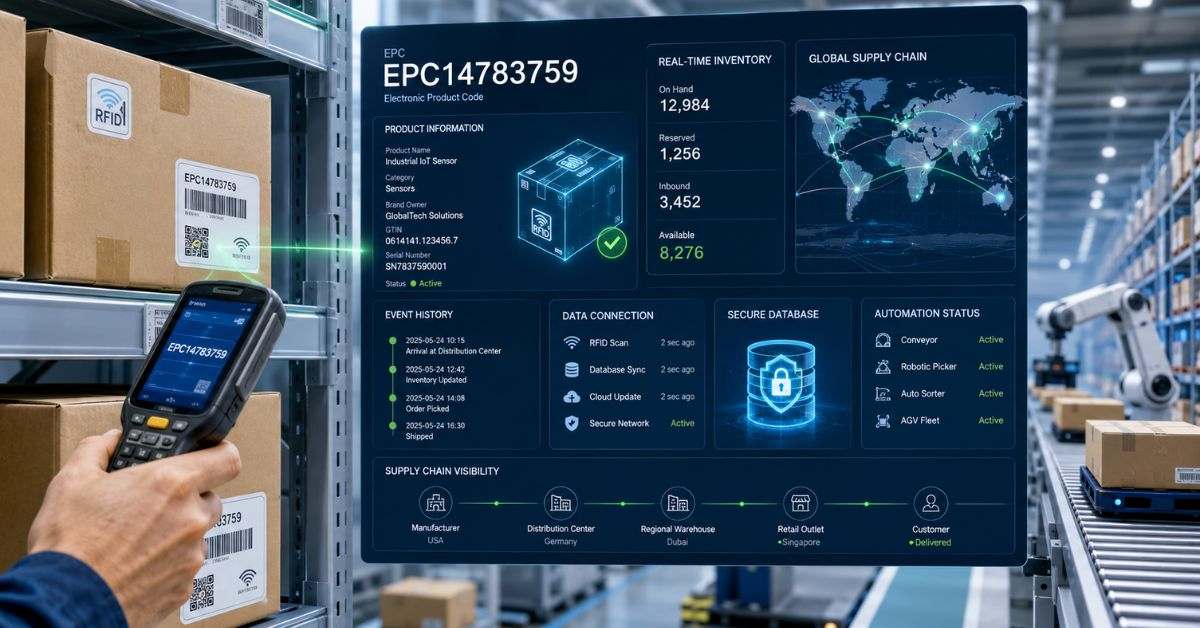
The prefix “EPC” is commonly associated with Electronic Product Code (EPC) standards governed by GS1, the global organization responsible for barcode and RFID standards.
Although EPC14783759 may not directly follow global EPC encoding rules, it reflects the broader concept of standardized product identification.
EPC systems are widely used in:
- RFID-enabled warehouses
- Smart inventory management
- Retail automation systems
- Global supply chain tracking
Electronic Product Codes improve visibility and allow organizations to track items at granular levels, including pallets, cartons, or individual products.
Internal identifiers like EPC14783759 align with these principles by ensuring consistent internal referencing across digital systems.
Case Study: Warehouse Optimization Through Internal Identifiers
To understand the practical impact of structured identifiers, consider a mid-sized eCommerce retailer that struggled with order inaccuracies and inventory mismatches.
Before implementing improved internal tracking
- Orders were manually reconciled.
- Picking errors occurred frequently.
- Inventory audits were time-consuming.
After deploying a structured internal ID system similar to EPC14783759, integrated with their WMS:
| Metric | Before Optimization | After Implementation |
| Order Accuracy | 89% | 97% |
| Fulfillment Speed | 48 hrs | 30 hrs |
| Manual Adjustments | High | Minimal |
The company reduced picking errors by nearly 30% and shortened reconciliation time significantly. Internal identifiers enabled seamless synchronization between barcode scanning systems and warehouse databases.
This case highlights how invisible backend codes can dramatically improve operational efficiency.
How Businesses Generate Codes Like EPC14783759
Internal identifiers are usually system-generated using structured algorithms to ensure uniqueness and scalability.
Common generation techniques
- Sequential numbering systems
- Timestamp-based encoding
- Randomized alphanumeric combinations
- SKU-linked structured patterns
Automation ensures no duplication occurs, even in high-volume operations processing thousands of orders per hour.
Modern cloud-based platforms automatically assign identifiers when:
- A purchase order is created.
- Inventory is received.
- A shipment batch is generated.
- A return request is logged.
This automation eliminates human error and supports scalable growth. As businesses expand, automated ID generation becomes essential for maintaining data consistency.
Security and Data Integrity Considerations
Internal identifiers play an important role in system security and data traceability. They provide structured audit trails that allow businesses to track actions within their systems.
Identifiers like EPC14783759 help support
- Secure database referencing
- Controlled system access
- Accurate reporting
- Fraud detection monitoring
In secure ERP environments, these identifiers are tied to encrypted records and role-based permissions. If discrepancies occur, administrators can trace activity logs back to specific database entries.
IBM’s Cost of a Data Breach Report consistently highlights operational vulnerabilities as costly risk factors. Structured internal referencing reduces traceability gaps and improves accountability.
Strong identifier architecture contributes directly to operational resilience.
How to Verify Whether a Code Is Internal or Public
If you encounter EPC14783759 and are unsure whether it is trackable, follow a simple verification process.
First, attempt to enter the code into the official courier’s website. If it returns no result, it is likely internal. Next, review your order confirmation email carefully. Most sellers provide a separate shipment tracking number once the carrier scans the package.
Indicators that a code is internal
- Labeled as “Reference ID” or “Order Reference”
- Not recognized by major carriers
- Appears only within invoice metadata
If uncertainty persists, contacting the seller’s customer support team is the fastest way to clarify.
Understanding this distinction prevents confusion and saves time.
The Future of Internal Tracking Technology
As digital transformation accelerates, internal identifiers will become even more intelligent and integrated.
Emerging technologies shaping logistics
- Artificial intelligence for predictive fulfillment
- IoT-enabled smart warehouses
- Blockchain-based traceability systems
- Advanced robotics integration
Internal identifiers will increasingly link to predictive analytics engines, enabling businesses to anticipate demand fluctuations and optimize warehouse layout dynamically.
Unified global standards may also emerge, improving interoperability across international logistics platforms.
Companies investing in backend digital infrastructure are better positioned to scale efficiently while maintaining data accuracy.
Why Understanding EPC14783759 Matters
Even though EPC14783759 is not customer-facing, understanding its role enhances your awareness of how modern logistics systems function. For businesses, internal identifiers support:
- Operational scalability
- Reduced error rates
- Faster reporting
- Improved automation
For consumers, recognizing the difference between internal references and shipment tracking numbers prevents frustration when monitoring deliveries.
Supply chains today are technology-driven ecosystems built on data precision. Internal identifiers are foundational components that keep these systems synchronized and efficient.
FAQs
Is EPC14783759 a courier tracking number?
No. It is typically an internal logistics reference code used within company systems.
Why doesn’t EPC14783759 work on shipping carrier websites?
EPC usually stands for “Electronic Product Code.” It functions only inside backend logistics software.
What does EPC usually stand for?
“EPC” often refers to Electronic Product Code, a global identification standard used in RFID systems.
Who uses identifiers like EPC14783759?
Warehouse operators, ERP systems, logistics managers, and eCommerce platforms rely on them for internal operations.
How can I obtain my real tracking number?
Check your shipment confirmation email or contact the seller directly for the carrier-issued tracking code.
Conclusion
EPC14783759 represents the type of structured internal identifier that powers modern logistics systems. While it may resemble a courier tracking number, it functions as a backend reference within supply chains, warehouse databases, and ERP platforms.
These identifiers ensure operational accuracy, enhance automation, and strengthen data integrity. As logistics technology continues to evolve through AI, RFID, and blockchain innovations, internal referencing systems will become even more critical.
By understanding how EPC14783759 works, both businesses and consumers gain clarity about the invisible digital infrastructure that keeps global commerce running smoothly.